Bessent at G20: No Economic Relief for Russia Until Ukraine War Ends; Iran Sanctions and Bond Yields Still on the Table
At the G20 in Asheville, Bessent told Russia’s finance minister there will be no sanctions relief until the Ukraine war ends, while pressing weekly Iran bank sanctions and trying to cool 30-year yields.
 Tommy Flynn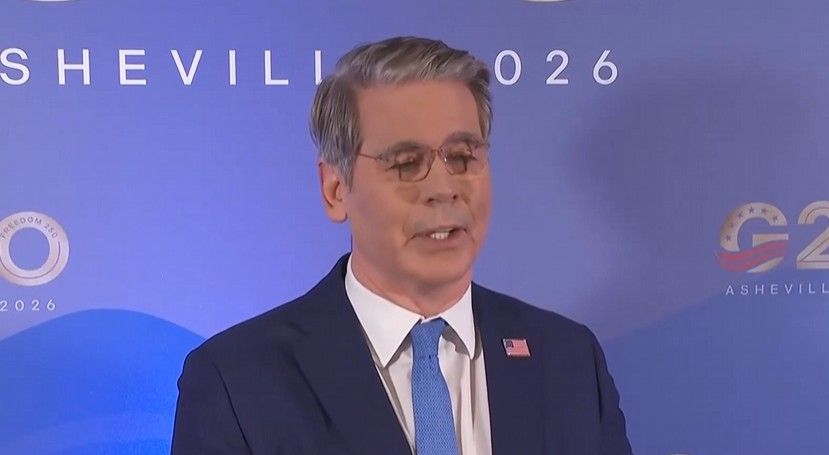
U.S. Treasury Secretary Scott Bessent told Russian Finance Minister Anton Siluanov on Monday that no sanctions relief and no new economic agreements are possible until the war in Ukraine ends, a source familiar with their bilateral meeting said. The encounter took place on the sidelines of the G20 finance ministers and central bank governors gathering in Asheville, North Carolina, the first two-day session of the U.S.-hosted finance track. Siluanov’s appearance was his first in-person G20 finance meeting since Russia’s 2022 invasion of Ukraine. Russia’s finance ministry said the two discussed financial cooperation within the G20 framework. A U.S. official said the focus was President Trump’s peace plan for Ukraine. When Siluanov raised other areas of mutual interest, the source said Bessent interrupted and stated that “nothing is possible until the war is over.” Treasury Undersecretary for International Affairs Erin Browne said Bessent “conveyed to him that the war needs to end, and we want to see a peaceful outcome.” Asked why Russia was invited, President Trump told reporters, “We like getting along with everybody.” German Finance Minister Lars Klingbeil called Siluanov’s presence a “quite troubling” signal and said Europe is preparing a further sanctions package. Some European ministers objected to a group photo that included the Russian official. The United States holds the G20 presidency this year; officials also invited Poland, which is not a permanent member.
Bessent used the same meetings to press counterparts to cut remaining commercial ties with Iran under Operation Economic Outcast, the campaign Treasury launched last week with sectoral secondary sanctions on digital assets, technology, gold, aviation, and shipping and designations of more than 60 entities, individuals, and vessels. On Friday Treasury moved against the UAE branches of Egypt’s Banque Misr over alleged Iran-linked flows. Bessent told Reuters on Sunday that new secondary sanctions would roll out weekly, starting with banks: “You’re going to see a lot more of these every week. We’re starting with the banks, and we’re telling the banks it’s not okay to have Iranian money and to aid the regime.” He told the Associated Press the administration is prepared for “financial violence if we have to” and that “there can be no leakage. You’re either with us or you’re with the Iranians.” Asked Monday how long it would take for Iran’s economy to collapse, he said it could be “within weeks or months” and that “the economy doesn’t have to collapse, we just have to have the regime come to their senses.” He thanked the European Union and the European Central Bank for what he called strong support for the economic campaign. The EU issued a statement welcoming added pressure and saying it would work with the United States and other partners. A Treasury official said Iran compliance would come up in every G20 bilateral. Hostilities with Iran resumed in the days before the meeting; the unresolved Hormuz disruption has kept energy costs elevated. Canada-U.S. tariff talks had also collapsed, adding friction among attendees.
Bessent opened the plenary arguing that stronger growth is the way out of a post-2008 and post-COVID debt overhang. Global debt earlier this year reached a record of nearly $353 trillion. U.S. national debt recently topped $40 trillion. Yields on 30-year Treasuries hit their highest levels in 19 years this month before Bessent announced a doubling of scheduled longer-dated buybacks to $4 billion per operation, which briefly cooled yields. He told the session that growth has underperformed for too long because of “policy failures of our own making,” listing excessive regulation, poorly designed tax incentives, insufficient investment, market fragmentation, and workforce-skill gaps. Federal Reserve Chair Kevin Warsh joined the opening; he had recently signaled the Fed could raise short-term rates even as Treasury tries to pull down the long end. Officials said they expect yields to ease as inflation cools and as the Iran energy shock recedes. The agenda also includes trade imbalances, with Bessent urging a shift away from China’s export-heavy model, plus digital assets, cross-border payments, and debt transparency. Some ministers objected to limited journalist access at the Asheville compound. The finance meeting runs through Tuesday.
Join the Team
Are you trying to break into news writing but struggling to get published at major outlets? At RWT News, we're always looking for talented, motivated writers who share our commitment to straightforward, factual conservative journalism. If you believe in honest reporting and want real experience and bylines, we'd love to hear from you.
Visit our Join the Team page to learn more and contact us directly.