Appeals Court Stays Lower Court Block on Trump White House Ballroom Construction for Second Time in a Week
The three-judge panel of the U.S. Court of Appeals for the District of Columbia Circuit paused U.S. District Judge Richard Leon’s Thursday ruling, permitting full construction — both underground and above-ground portions — to resume until the court hears arguments on June 5.
 Tommy Flynn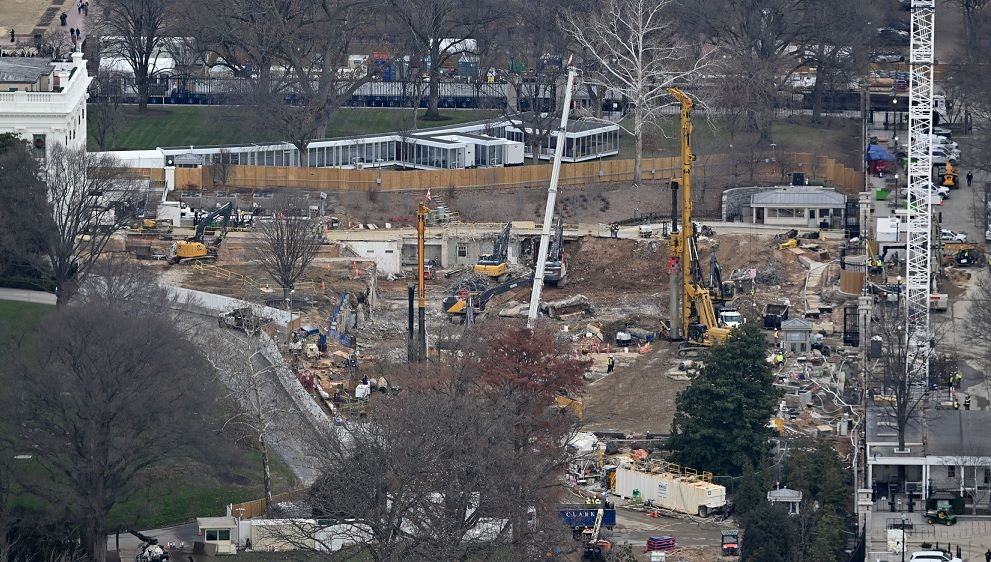
WASHINGTON — A federal appeals court on Friday granted an administrative stay of a lower court order that had blocked above-ground construction of President Donald Trump’s planned White House ballroom, marking the second time in a week the D.C. Circuit has allowed the project to move forward.
The three-judge panel of the U.S. Court of Appeals for the District of Columbia Circuit paused U.S. District Judge Richard Leon’s Thursday ruling, permitting full construction — both underground and above-ground portions — to resume until the court hears arguments on June 5.
The project involves a 90,000-square-foot neoclassical ballroom and related facilities on the site of the former East Wing, which the administration demolished to make way for the expansion. The nearly $400 million privately funded initiative includes enhanced national security features such as an underground presidential bunker.
Judge Leon, a George W. Bush appointee, first ruled on March 31 that construction must halt without explicit congressional approval, citing federal law governing major White House alterations. He stayed enforcement of that order for 14 days to allow an appeal. On April 11, the D.C. Circuit issued its first temporary stay, extending work until April 17 and directing Leon to clarify the national security implications of any halt.
In response, Leon issued a clarified order Thursday allowing below-ground work on the bunker and security facilities but blocking most above-ground ballroom construction. He stayed that decision for seven days. The appeals court’s latest overnight ruling puts the entire project back on track pending the June hearing.
The Trump administration has argued that stopping construction mid-project poses immediate risks to presidential safety and White House operations. The White House did not immediately comment on Friday’s ruling.
The lawsuit was brought by the National Trust for Historic Preservation and other groups, who contend the project requires congressional authorization under longstanding statutes governing the White House grounds.
For the president, his family, and White House staff who rely on secure facilities for official events and protection, the repeated appeals court interventions provide short-term certainty amid ongoing litigation. The case highlights broader tensions over executive authority versus congressional oversight on White House infrastructure projects.
Join the Team
Are you trying to break into news writing but struggling to get published at major outlets? At RWT News, we're always looking for talented, motivated writers who share our commitment to straightforward, factual conservative journalism. If you believe in honest reporting and want real experience and bylines, we'd love to hear from you.
Visit our Join the Team page to learn more and contact us directly.