Appeals Court Blocks Chicago Judge's Order Restricting ICE Agents' Use of Force Amid Violent Protests
The blocked order stemmed from a preliminary injunction issued on November 6, 2025, by U.S. District Judge Sara Ellis, an Obama appointee, in a lawsuit filed by media organizations including the Chicago Headline Club, Chicago Newspaper Guild Local 34071, and Block Club Chicago.
 Tommy Flynn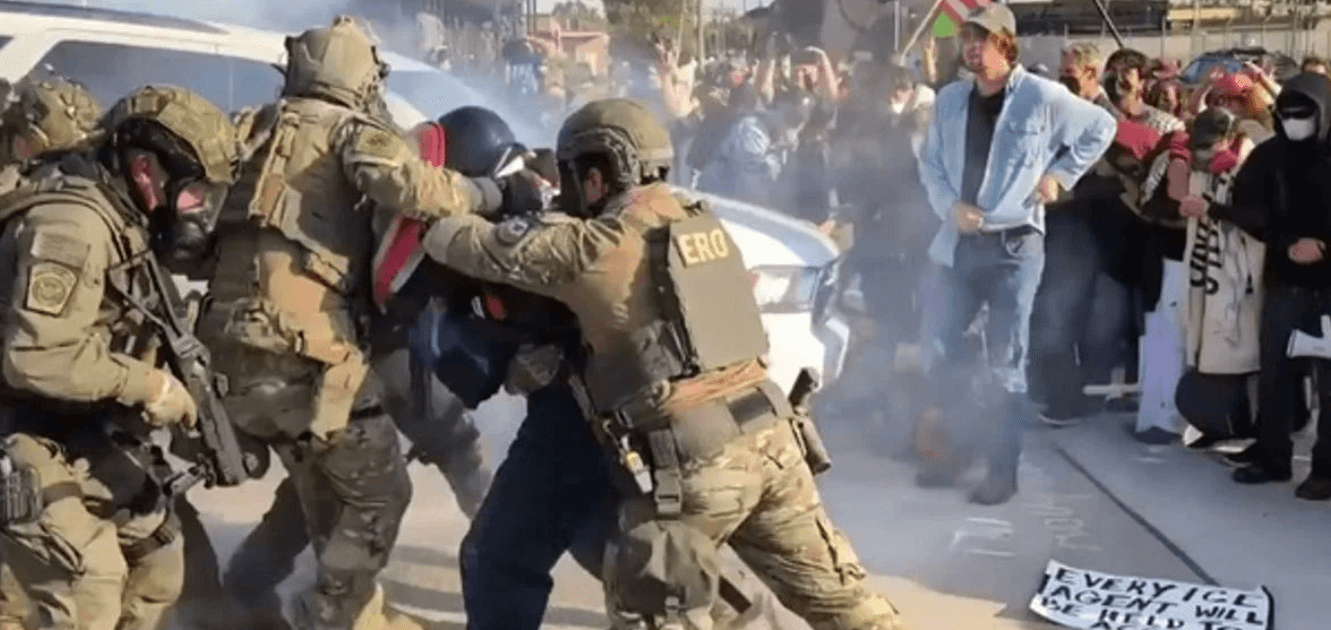
A federal appeals court in Chicago temporarily halted a lower judge's order on November 19, 2025, that had restricted U.S. Immigration and Customs Enforcement (ICE) agents' use of force during enforcement operations in the city and surrounding suburbs, deeming the injunction "overbroad" and "too prescriptive." The unanimous three-judge panel of the Seventh Circuit Court of Appeals issued the stay pending a full appeal, cautioning against "overreading" the decision while noting that a expedited review could yield a "more tailored and appropriate" remedy.
The blocked order stemmed from a preliminary injunction issued on November 6, 2025, by U.S. District Judge Sara Ellis, an Obama appointee, in a lawsuit filed by media organizations including the Chicago Headline Club, Chicago Newspaper Guild Local 34071, and Block Club Chicago. The plaintiffs alleged a "pattern of extreme brutality" by federal agents during Operation Midway Blitz, a Trump administration initiative launched in September 2025 that has resulted in over 3,000 arrests across Chicago and nearby communities. Ellis barred agents from using physical force, chemical agents like tear gas and pepper balls, or less-lethal munitions unless necessary to prevent an "immediate threat of death or serious physical injury," describing the tactics as violating First and Fourth Amendment rights and "shocking the conscience."
Ellis based her ruling on testimony and evidence from a hearing, including videos showing agents deploying tear gas and pepper balls against protesters and journalists. She found Trump administration witnesses, including Border Patrol Commander Gregory Bovino—who oversaw 230 officers in the region before transferring to North Carolina—"simply not credible," criticizing their accounts of threats as exaggerated. The judge required Bovino to check in daily with her court, a provision the appeals court also paused.
The violence prompting the original order escalated in October 2025, with multiple incidents of protesters assaulting ICE agents and obstructing arrests. On October 4 in Brighton Park, demonstrators threw rocks, fireworks, and bottles at agents, injuring two officers and prompting tear gas deployment; one protester was shot in the leg after drawing a weapon. In Little Village on October 23, crowds surrounded a detention van, shattering windows and attempting to free detainees, leading to pepper ball use that dispersed 50 rioters. DHS reported over 100 assaults on officers since September, including gunfire in one case, forcing relocation of operations to Charlotte, North Carolina, and New Orleans. Assistant Secretary Tricia McLaughlin called the stay "a win for the rule of law and for the safety of every law enforcement officer," noting agents faced "violent interference" that endangered public safety.
The appeals court, comprising Judges Michael Brennan (Trump appointee), Thomas Kirsch II (Trump appointee), and Diane Sykes (Bush appointee), argued Ellis's injunction impermissibly infringed on executive branch authority, resembling a "federal regulation" that dictated specific tools and scenarios. They emphasized deference to law enforcement judgments under Graham v. Connor (1989), which sets the reasonableness standard for force, and noted the order's nationwide scope exceeded the plaintiffs' standing in Illinois. The panel expedited briefing, scheduling oral arguments for December 10.
The lawsuit, filed October 15, 2025, by 12 plaintiffs including journalists who claimed agents targeted them to suppress coverage, also alleges inhumane conditions at the Broadview ICE facility, prompting a judicial visit on November 15. DOJ attorneys countered that the operations targeted criminals with final removal orders, not protesters, and that force was justified by documented threats like thrown projectiles and vehicle rammings. A separate suit by the ACLU challenges facility overcrowding, with 1,200 detainees reported in November.
DHS operations in Chicago have tapered since the injunction, with 1,800 arrests in October alone, but the stay restores agents' flexibility. If upheld, the appeals ruling could influence similar challenges in sanctuary cities like Los Angeles and Washington, D.C., where ICE faces ongoing litigation over force. Ellis is set to issue her full opinion on November 20, but the stay remains in effect.
Support Independent Conservative News
RWTNews is independent conservative news — no corporate backing, no agenda driven by advertisers. We rely entirely on readers like you to keep the lights on and the truth coming. If you've found value in what you read here, consider supporting us with a one-time or monthly contribution. Every dollar goes directly toward keeping this site running and growing.
Secured by Stripe. Your payment info is never stored on our servers.