Alabama Appeals to Supreme Court After Lower Court Blocks New Congressional Map
The lower court issued a preliminary injunction on May 26, ordering Alabama to use a court-drawn map with two majority-Black districts instead of the legislature’s plan, which features one such district.
 Tommy Flynn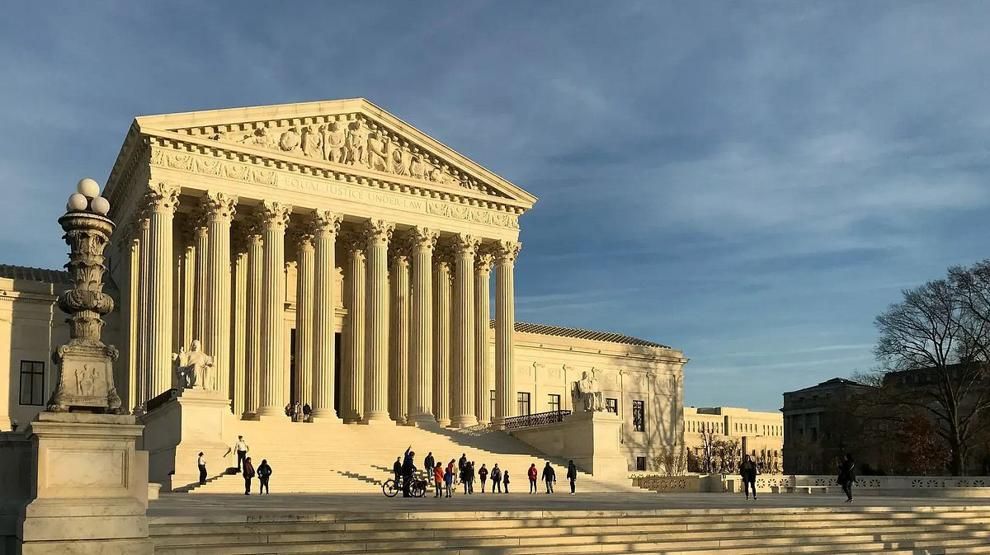
MONTGOMERY — Alabama Attorney General Steve Marshall filed an emergency appeal with the U.S. Supreme Court on May 27, 2026, seeking to overturn a federal three-judge panel’s ruling that blocked the state’s 2023 congressional redistricting map for the 2026 midterm elections.
The lower court issued a preliminary injunction on May 26, ordering Alabama to use a court-drawn map with two majority-Black districts instead of the legislature’s plan, which features one such district. Judges ruled the 2023 map intentionally discriminated against Black voters under the 14th Amendment’s Equal Protection Clause.
Alabama’s 2023 map, passed after the 2020 census, aimed to reflect traditional districting principles while creating one majority-Black district in a state where Black residents comprise about 27% of the population. Republicans argue it complies with the Constitution and recent Supreme Court guidance limiting race-based map requirements.
The dispute traces to the Supreme Court’s 2023 Allen v. Milligan decision, which required a second district where Black voters could elect preferred candidates. After the Court’s April 2026 ruling in Louisiana v. Callais, narrowing Section 2 of the Voting Rights Act, Alabama sought to implement its 2023 map. The high court vacated prior injunctions in May 2026 and remanded for reconsideration.
The three-judge panel, including Reagan and Trump appointees, reaffirmed its block, stating the map was tainted by intentional racial discrimination independent of the Voting Rights Act. It mandated continued use of the remedial map for August primaries and November elections.
Marshall described the 2023 map as “blandly unobjectionable” and said the state would appeal immediately. The filing requests the Supreme Court stay the injunction to allow use of the legislature’s map, citing urgency ahead of the 2026 midterms.
The case highlights ongoing tensions between state authority to draw compact districts and federal oversight under voting rights laws. A Supreme Court decision could clarify limits on racial considerations in redistricting following Callais. No response timeline has been set.
Support Independent Conservative News
RWTNews is independent conservative news — no corporate backing, no agenda driven by advertisers. We rely entirely on readers like you to keep the lights on and the truth coming. If you've found value in what you read here, consider supporting us with a one-time or monthly contribution. Every dollar goes directly toward keeping this site running and growing.
Secured by Stripe. Your payment info is never stored on our servers.