AI Takes Center Stage in Modern Warfare as Pentagon Expands Project Maven in Iran Conflict
Project Maven was launched in 2017 as a joint effort between the Department of Defense and private tech companies to apply computer vision and machine learning to massive volumes of drone and satellite imagery.
 Tommy Flynn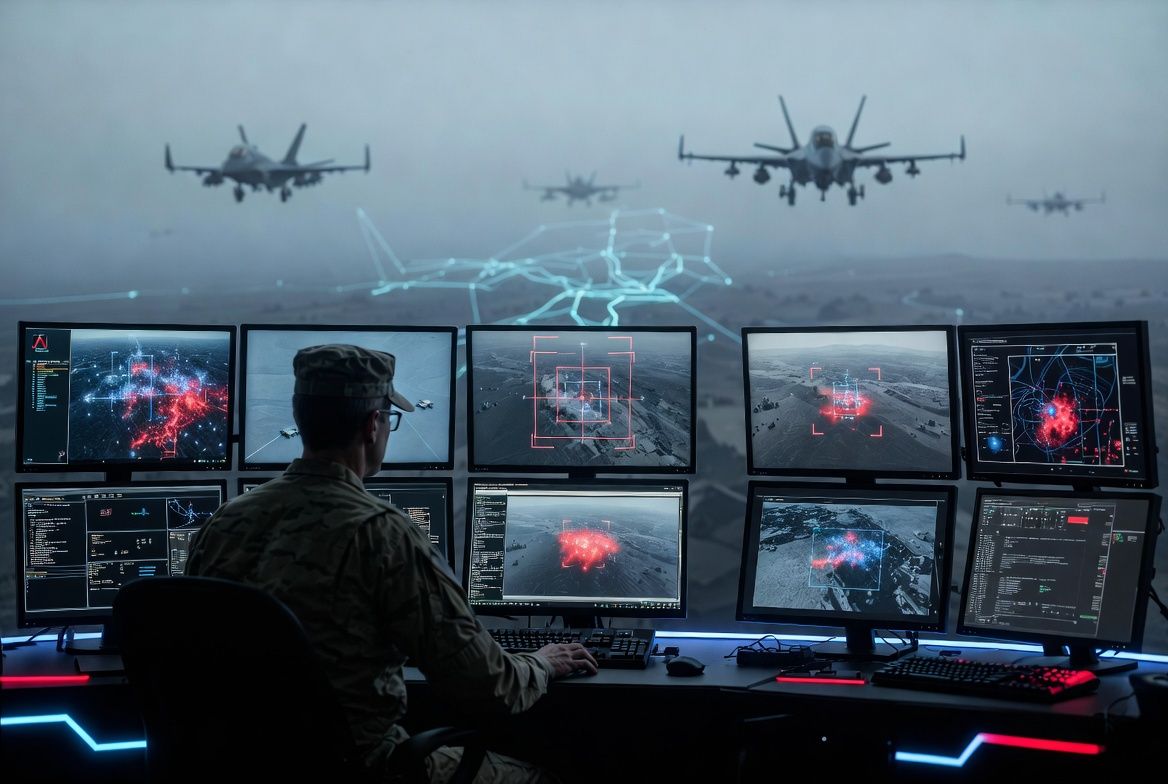
WASHINGTON – Artificial intelligence is rapidly becoming a core component of U.S. military operations, transforming everything from target identification to real-time battlefield decision-making. The Pentagon’s flagship AI program, Project Maven, stands as the most prominent example of this shift and is now playing a direct role in ongoing operations against Iran.
Project Maven was launched in 2017 as a joint effort between the Department of Defense and private tech companies to apply computer vision and machine learning to massive volumes of drone and satellite imagery. The goal was to automate the detection and tracking of objects such as vehicles, buildings, and people, dramatically speeding up intelligence analysis that previously required thousands of man-hours.
The program gained public attention in 2018 when Google employees protested the company’s involvement, leading Google to decline further work on Maven. The Pentagon then transitioned the project to other contractors, including Palantir, Anduril, and several smaller AI firms. Over the past several years, Maven has evolved from an experimental tool into a fully operational system deployed across multiple combatant commands.
In the current conflict with Iran, which began with U.S. and Israeli strikes on February 28, 2026, Project Maven and related AI systems are being used to process vast amounts of real-time intelligence. Officials say the technology has significantly improved the military’s ability to identify Iranian missile launchers, drone bases, nuclear-related sites, and command nodes hidden in urban or mountainous terrain.
According to defense sources, Maven-derived algorithms have helped reduce the time required to analyze drone footage from hours to minutes, enabling faster targeting decisions while minimizing collateral damage. The system is also being used to track Iranian naval vessels and mine-laying operations in the Strait of Hormuz.
The Pentagon has steadily expanded Maven’s scope. In 2024 and 2025, the program incorporated more advanced models capable of autonomous target recognition, pattern-of-life analysis, and predictive modeling of enemy movements. The Trump administration has accelerated funding and integration of these tools as part of a broader push to maintain technological superiority over near-peer adversaries such as China and Iran.
Critics have raised concerns about the ethical implications of increasing reliance on AI for lethal decisions, while supporters argue the technology improves precision and reduces risk to American troops. The Pentagon maintains that all targeting decisions remain under human oversight.
Project Maven is now viewed inside the Defense Department as the foundational program for a larger “AI ecosystem” that will power future autonomous systems, drone swarms, and command-and-control networks. Its expanded use in the Iran theater demonstrates how quickly AI has moved from experimental status to a central tool in active combat operations.
As the conflict continues, defense officials say Maven and similar AI capabilities will remain critical for maintaining operational tempo and countering Iran’s asymmetric tactics.
Support Independent Conservative News
RWTNews is independent conservative news — no corporate backing, no agenda driven by advertisers. We rely entirely on readers like you to keep the lights on and the truth coming. If you've found value in what you read here, consider supporting us with a one-time or monthly contribution. Every dollar goes directly toward keeping this site running and growing.
Secured by Stripe. Your payment info is never stored on our servers.