8th Circuit Overturns Minnesota District Judge, Upholds ICE Authority to Detain Illegal Aliens Without Bond Hearings
Attorney General Pam Bondi hailed the outcome on social media as a “MASSIVE COURT VICTORY against activist judges and for President Trump’s law and order agenda.”
 Tommy Flynn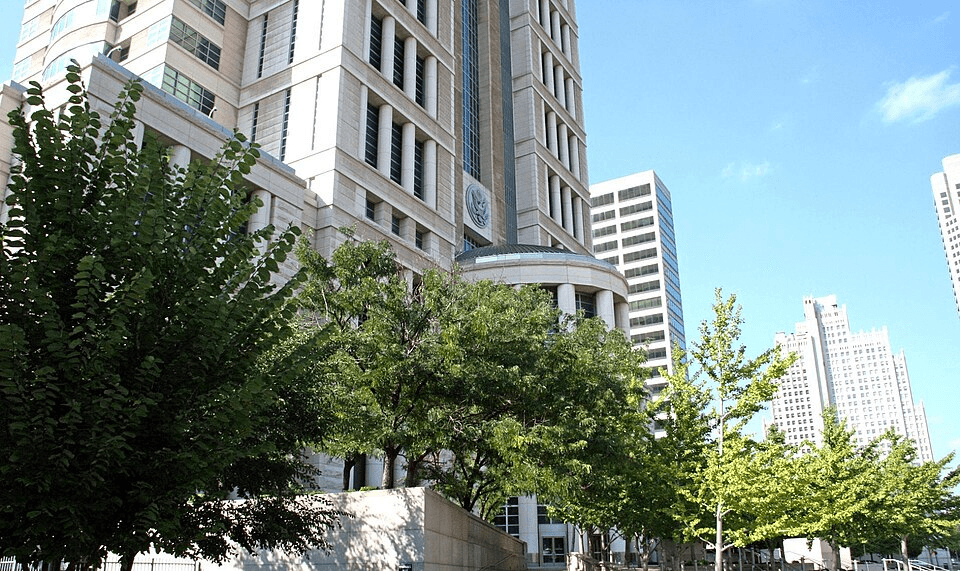
ST. LOUIS – The U.S. Court of Appeals for the Eighth Circuit ruled 2-1 on March 25, 2026, that Immigration and Customs Enforcement (ICE) may detain certain illegal aliens without bond hearings while their removal proceedings are pending, reversing a Minnesota federal district court order and aligning the circuit with a recent Fifth Circuit decision.
The case, Avila v. Bondi (No. 25-3248), involved Joaquin Herrera Avila, a Mexican national who entered the United States illegally in 2006 and again in 2016. Avila was arrested in August 2025 during a traffic stop in Minneapolis after admitting he had no legal documents authorizing his presence. ICE detained him without bond under 8 U.S.C. § 1225(b)(2)(A), the mandatory detention provision for aliens “seeking admission” who are not clearly entitled to enter.
Avila filed a habeas corpus petition challenging the detention. U.S. District Judge John R. Tunheim in Minnesota granted the petition, ordering ICE to release Avila or provide a bond hearing within seven days. The judge interpreted the statute narrowly, ruling that § 1225(b)(2)(A) applies only to individuals encountered at the border who are actively “seeking admission,” not to long-term illegal aliens already present inside the country.
A three-judge panel of the Eighth Circuit reversed that decision. Judge Bobby E. Shepherd, joined by another Republican-appointed judge, wrote the majority opinion, holding that the plain text of the statute treats any alien present in the United States without having been lawfully admitted as an “applicant for admission” and therefore “seeking admission.” The court rejected the district judge’s interpretation as contrary to congressional intent.
“Congress didn’t create a special carve-out for illegals who successfully evaded detection long enough to set up shop in Minneapolis,” the opinion stated. The panel emphasized that “seeking admission” and “applicant for admission” are synonymous under the law, and the statute imposes mandatory detention without a bond hearing for such individuals during removal proceedings.
Judge Ralph R. Erickson dissented, arguing the majority’s reading represented a “novel” interpretation not previously applied by courts or prior administrations. He noted Avila would have been entitled to a bond hearing under longstanding practice if arrested at any point during his nearly two decades in the country.
The ruling is the second major appellate victory for the Trump administration’s immigration enforcement policy on detention. Last month, the Fifth Circuit reached the same conclusion in a similar case, Buenrostro-Mendez v. Bondi. Together, the decisions cover 13 states and provide significant legal backing for ICE’s ability to detain illegal aliens encountered in the interior without the administrative burden of bond hearings.
The decision comes amid a surge in habeas corpus petitions challenging detention. More than 30,000 such filings have been lodged in federal courts since President Donald Trump took office in January 2026, many stemming from large-scale enforcement operations such as “Operation Metro Surge” in Minnesota, where over 400 lawsuits were filed in a single month.
Attorney General Pam Bondi hailed the outcome on social media as a “MASSIVE COURT VICTORY against activist judges and for President Trump’s law and order agenda.” The ruling is expected to streamline removal proceedings for hundreds of thousands of cases and reduce the likelihood of “catch-and-release” practices that critics say undermine border security and interior enforcement.
The American Civil Liberties Union, which represented Avila, did not immediately comment on next steps. The case now returns to the district court for proceedings consistent with the Eighth Circuit’s opinion. Similar challenges remain pending in other circuits, including the Ninth and Seventh, where outcomes could create further splits and potential Supreme Court review.
Support Independent Conservative News
RWTNews is independent conservative news — no corporate backing, no agenda driven by advertisers. We rely entirely on readers like you to keep the lights on and the truth coming. If you've found value in what you read here, consider supporting us with a one-time or monthly contribution. Every dollar goes directly toward keeping this site running and growing.
Secured by Stripe. Your payment info is never stored on our servers.